
Why Connecting the Dots Can Change Your Health
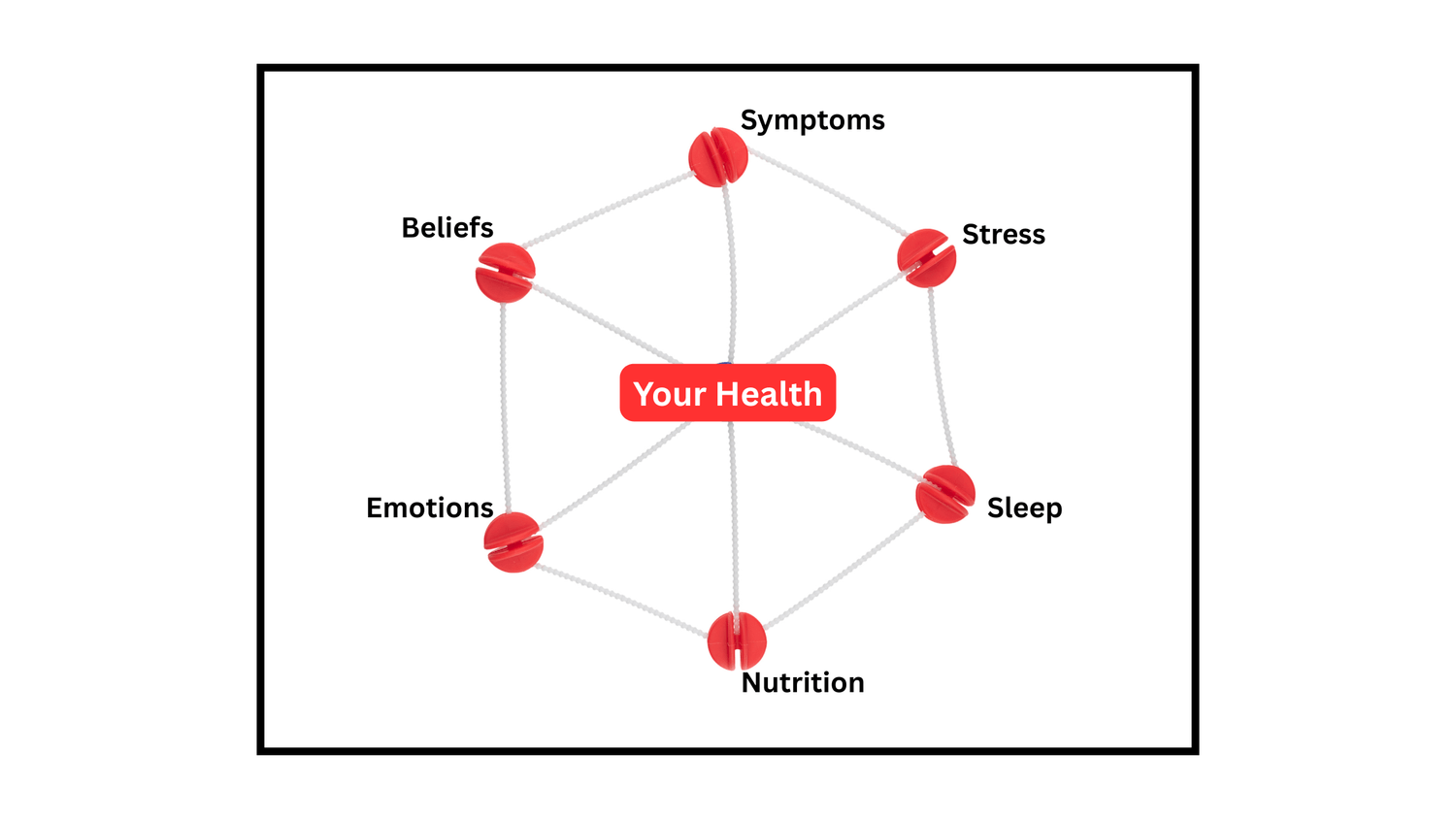
In This Blog, You'll Learn:
Why many people need help connecting their symptoms, food, stress, and patterns
Why “what to do” is not always the missing piece
How emotional history and subconscious patterns can influence health choices
Why nutrition support is more powerful when it is personalized
How whole-person support can help people feel less confused and more empowered
Why this same approach also matters for corporate wellness ROI
People Usually Know Pieces of the Puzzle
Many people come to wellness already knowing a lot.
They may know they should eat more protein.
They may know sleep matters.
They may know stress affects digestion.
They may know movement helps.
They may know certain foods make them feel better and others make them feel worse.
They may have seen doctors, specialists, therapists, nutritionists, trainers, or other health professionals.
They may have test results, diagnoses, medications, supplements, symptoms, food lists, and years of experience trying to figure out their body.
And still, they may feel confused, not because they're not trying, not because they don't care and not because they lack discipline. Often, what they need is someone to help them connect the dots.
The Body Does Not Live in Separate Boxes
In conventional care, people often see different providers for different concerns.
One doctor may look at digestion.
Another may look at hormones.
Another may look at medication.
Another may look at inflammation.
Another may look at pain.
Another may look at anxiety, sleep, or stress.
Each professional may be doing their best within their area. But the person living inside the body is not divided into separate departments. The body is connected.
Food affects energy.
Stress affects digestion.
Sleep affects cravings.
Trauma can affect the nervous system.
The nervous system can affect food choices.
Blood sugar can affect mood.
Inflammation can affect focus.
Emotions can affect eating.
The gut can affect the brain.
Old beliefs can affect behavior.
Daily routines can affect long-term health.
When we look at only one piece at a time, the full pattern can be missed.
This Is the Kind of Support Many People Need
I am currently working with someone who has been to many doctors. She is beginning to understand how pieces of her story connect.
Past trauma.
Physical symptoms.
Food choices.
Nervous system stress.
Nutrition patterns.
The foods that help her feel better.
The symptoms that flare when her body is overwhelmed.
The frustration of realizing that many doctors do not communicate with each other.
This is where whole-person support matters. Because sometimes the person does not need one more isolated opinion. They need help seeing how the pieces fit together. They need someone to look at the whole picture and say:
This matters.
This may be connected.
This pattern is worth noticing.
This food helps you feel better.
This stress response may be affecting your body.
This symptom may be giving us information.
This is not random.
You are not crazy.
Your body may be trying to communicate.
That kind of support can change how a person sees themselves.
My Own Story Is Why I Understand This
This is also personal for me. I struggled with binge eating for more than 40 years.
I knew a lot about food.
I knew what I “should” do.
I knew how to eat healthy.
I knew how to start over.
I knew how to hide it.
But what I did not understand for a long time was what was underneath the behavior.
The emotions.
The stress.
The beliefs.
The shame.
The subconscious patterns.
The feeling that food was comfort, protection, reward, and relief.
Information alone did not free me. Understanding helped free me. I had to learn to connect the dots between my emotions, my body, my beliefs, my food choices, and my patterns. That is why I do this work. Because people often do not need another rule. They need help understanding the pattern underneath the behavior.
When Weight Is Not Just About Food
Imagine a woman who has been trying to lose weight for years.
She has followed plans.
She has counted, restricted, restarted, and blamed herself.
She has been told to eat less and move more.
But no one has really asked what her life feels like.
Is she sleeping?
Is she eating enough earlier in the day?
Is stress driving evening choices?
Is her body inflamed?
Is she using food for comfort?
Is her metabolism responding to years of dieting?
Is she carrying emotional weight as well as physical weight?
When someone like this begins to connect the dots, weight is no longer treated as a character flaw.
It becomes part of a larger conversation.
🧐Food.
🧐Hormones.
🧐Stress.
🧐Sleep.
🧐Emotions.
🧐History.
🧐Patterns.
🧐Support.
That shift can help someone move from shame to understanding. And from understanding to more supportive choices.
When Symptoms Finally Start Making Sense
Imagine someone who has been dealing with symptoms that feel disconnected.
Digestive issues.
Fatigue.
Brain fog.
Joint discomfort.
Mood changes.
Food sensitivities.
Energy crashes.
Sleep disruption
She has seen providers. She has tried suggestions. She has been told things look “normal,” but she still does not feel like herself.
This is where functional nutrition can be so helpful. Not because it replaces medical care. It does not. But because it asks different questions.
🧐What foods help you feel better?
🧐What foods seem to trigger symptoms?
🧐What happens when stress is high?
🧐How is digestion affecting energy?
🧐How is sleep affecting cravings?
🧐How is your body responding to daily inputs?
When someone begins to see the relationship between food, symptoms, stress, and lifestyle, the body can start to feel less confusing. The goal is not to chase every symptom. The goal is to understand the pattern.
How This Helps People Change Their Lives
The real value of this work is not simply having another plan. The value is helping people understand themselves. When a person begins connecting the dots, they may start to:
Choose foods that help them feel better.
Notice stress before it becomes a spiral.
Understand cravings with less judgment.
Recognize symptoms as information.
See how trauma or old beliefs may influence choices.
Build routines that support energy and mood.
Ask better questions about their body.
Feel more confident advocating for themselves.
Stop treating their body like the enemy.
Create changes that feel realistic and sustainable.
This is how lives change. Not through pressure, through understanding.
What Clients Say
“She has a special gift for helping individuals uncover the deeper reasons behind their behaviors. The information she shares has the potential to be life-changing.”
— Dr. Greg Grochowski
That is the heart of this work. The deeper reasons matter. The story matters. The body matters. The pattern matters. And when those pieces begin to connect, change becomes more possible.
A Simple Reflection
This week, choose one health concern or habit you have been trying to change.
Then ask:
What else might be connected to this?
Is there a food pattern?
A stress pattern?
A sleep pattern?
A symptom pattern?
An emotional pattern?
A belief or old story?
A routine that is no longer supporting me?
A missing piece of support?
You do not have to solve everything today. Just begin noticing the connections, sometimes the dots are already there. You just need help seeing the picture.
Healthy Habits High Returns® Insight
This same idea applies to organizations. Employees do not leave their lives, stress, food habits, symptoms, sleep issues, family responsibilities, trauma histories, or health patterns at the door when they come to work. They bring their whole selves.
That means workplace wellness cannot only focus on information. Many employees already know they need better sleep, more supportive nutrition, less stress, more movement, or healthier routines.
The deeper question is: What is making it difficult to do those things consistently?
Healthy Habits High Returns® helps organizations improve employee wellbeing outcomes by supporting the people behind the performance. When employees better understand the behaviors, stress patterns, food choices, lifestyle factors, and hidden influences affecting their health, organizations can create a stronger foundation for engagement, productivity, retention, and wellness program ROI.
Wellness isn’t a perk—it’s a performance strategy®.
How Sho Richek Functional Nutrition and Lifestyle Counseling Can Help
As a Behavior-Based Wellness Counselor and Functional Nutrition and Lifestyle Counselor, I help individuals and organizations connect the dots between food, stress, symptoms, lifestyle, emotions, beliefs, subconscious patterns, and daily choices.
For individuals, this may include food freedom, emotional eating, weight management, cravings, fatigue, digestive concerns, stress patterns, healthy aging, and sustainable lifestyle change.
For organizations, this may include behavior-based wellness counseling, practical nutrition guidance, stress awareness, employee wellness education, and whole-person support that complements existing wellness and EAP initiatives.
My work does not replace medical care. It helps people better understand the patterns influencing their health so they can ask better questions, make more supportive choices, and create a realistic path forward.
In Summary
Many people do not need one more isolated piece of advice.
They need help connecting the dots between:
Food
Stress
Symptoms
Sleep
Trauma
Emotions
Beliefs
Subconscious patterns
Lifestyle
Support
When these pieces are seen together, people often begin to understand themselves differently. And when they understand themselves differently, change becomes more possible.
Understanding creates awareness.
Awareness creates choice.
Choice creates sustainable change.
What's Next?
Next week, we’ll wrap up the July subconscious conversation by looking at the benefits of becoming aware of your subconscious habits. Because once you begin to see the patterns influencing your choices, you can begin creating a healthier relationship with your body, your food, your stress, and your life.
Ready to Take the Next Step?
If this resonates with you, I’d love to support you.
👉 Schedule a complimentary consultation here.
Let’s explore what sustainable support could look like for you.
Ready to explore how Healthy Habits High Returns® can support your team? Schedule an exploratory call.
Wellness isn’t a perk—it’s a performance strategy®
Twice a Month Newsletter
Would you like to stay in touch and receive supportive information as well as a new recipe?
Visit my website and sign up in the middle of the page. You'll also receive an audio of my 3-Minute Trigger Tamer.
Looking for More Insights?

Welcome!
Thank you for visiting! I'm Shoshanna Richek, a certified Functional Nutritionist, and I'd love to be your guide on the journey to food freedom.
Ready to learn about emotional eating and see how I can help you? Just click here!


Get Expert Advice on Holistic Healing
Sho Richek Functional Nutrition and Lifestyle Counselor copyright 2023-26 All Rights Reserved.