
Why Habit Change Takes Time and My 30-60-90 Formula
In This Blog, You'll Learn:
Why changing a habit is not just about deciding to do something different
How subconscious patterns are shaped by repetition
Why awareness is only the beginning of habit change
Sho’s 30-60-90 habit change framework
Why it may take 9–12 months to truly master a new pattern
How functional nutrition and lifestyle counseling can support sustainable change
Changing a Habit Is Not Just a Decision
Most people have had the experience of deciding they are finally going to change something.
This is the week I start walking.
This is the week I stop eating at night.
This is the week I drink more water.
This is the week I get to bed earlier.
This is the week I stop reacting the same way.
This is the week I finally stay consistent.
And sometimes, the first few days go beautifully.
Then life happens.
Stress shows up.
Schedules change.
Sleep gets interrupted.
Food choices get rushed.
Emotions get loud.
Old patterns return.
Then the mind says: “See? I failed again.”
But I don’t see it that way. Most of the time, the problem is not that you failed. The problem is that changing a habit takes more than a decision. It takes awareness, practice, repetition, support, and time. Especially when the habit is connected to a subconscious pattern.
Your Brain Likes What It Already Knows
The subconscious mind likes familiar patterns. That doesn't mean the pattern is best for you. It means the pattern has been practiced. The brain has learned: “When I feel this, I do that.”
When I feel stressed, I snack.
When I feel tired, I scroll.
When I feel overwhelmed, I shut down.
When I feel lonely, I eat.
When I feel pressure, I overwork.
When I feel uncomfortable, I distract myself.
These patterns may have been repeated for years, sometimes decades. So when we decide to change a habit, we are not just changing one action. We are creating a new pathway. That takes time.
Awareness Is the First Step, Not the Whole Process
In the first two weeks of this July series, we talked about why information alone does not change behavior and why awareness matters. Awareness is powerful. It helps you: see the pattern, identify the trigger, understand what the behavior may be giving you.
But awareness is not the finish line. Awareness opens the door. Then we have to practice walking through it. That is where habit change really begins.
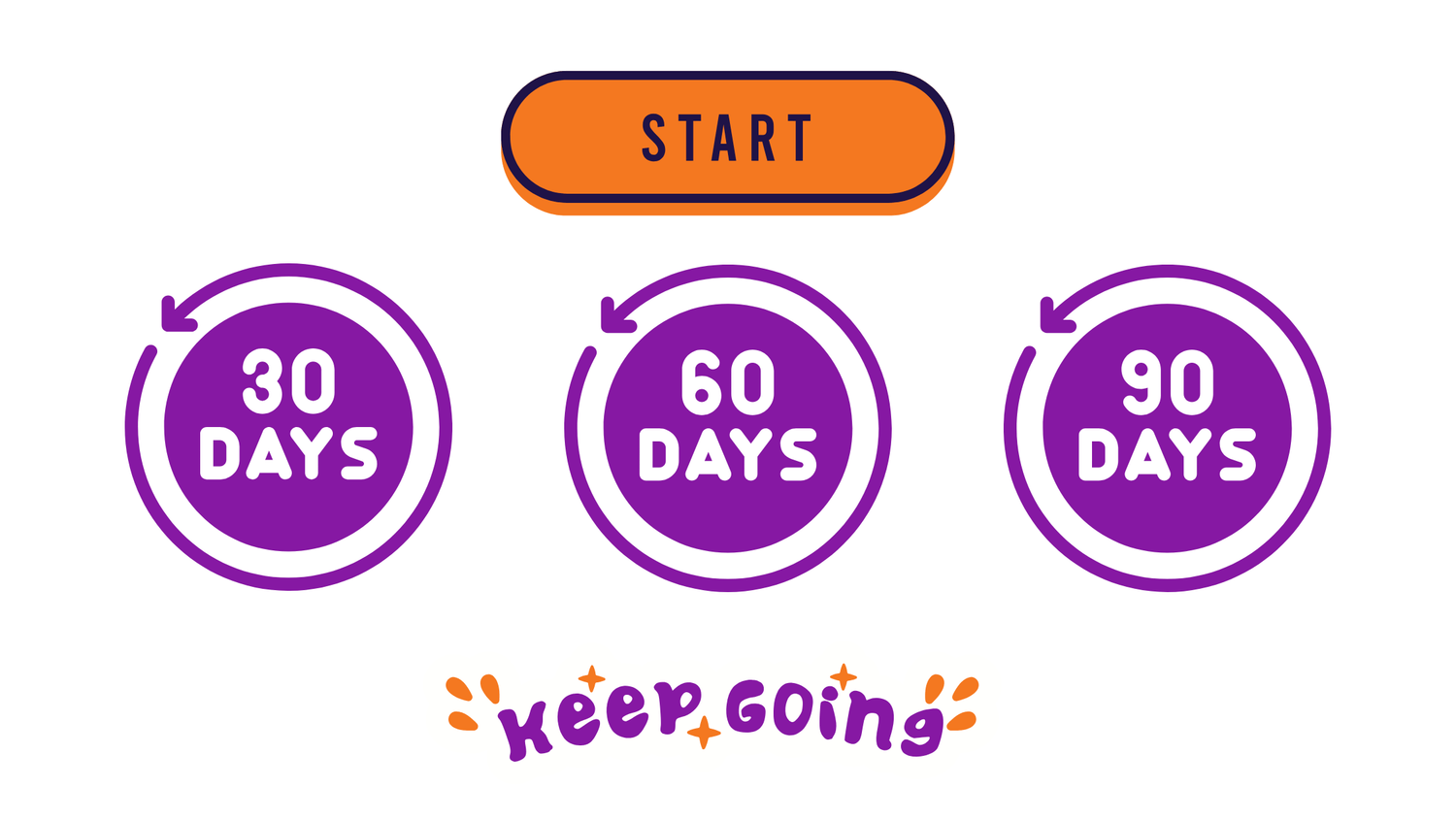
My 30-60-90 Habit Change Framework
I like to think about habit change in stages. Not because every person changes at the exact same pace. But because this framework gives people permission to stop expecting instant transformation.
30 Days to Learn
The first 30 days are about learning. You are learning:
the pattern.
the trigger.
what gets in the way.
what your body needs.
what support helps.
where the old habit shows up.What happened right before this behavior?
This stage is not about perfection it's about paying attention. For example, if you want to stop nighttime snacking, the first 30 days may help you notice:
I snack more when I skip lunch.
I snack more when I'm tired.
I snack more after stressful days.
I snack more when I finally sit down.
I snack more when dinner did not include enough protein.
That is useful information. You are not failing. You are learning.
60 Days to Practice
The next stage is practice. This is where you begin trying different responses, not a hundred changes at once, small, realistic shifts.
Maybe you:
add more protein at breakfast.
plan a more satisfying lunch.
create an evening transition.
take a pause before eating.
ask, “What is triggering this?”
choose tea, a walk, journaling, or rest before reaching for food.
Practice means you are building a new relationship with the trigger. You are teaching your brain: “When I feel this, I have another option.” That does not happen overnight. It happens through repetition.
90 Days to Make It Part of Your Life
Around 90 days, the new rhythm may begin to feel more natural, not perfect, more natural.
You may start noticing:
I can plan for my trigger.
I recover faster.
I pause more often.
I understand my triggers sooner.
I make supportive choices more consistently.
I do not fall into all-or-nothing thinking as quickly.
I can return to myself without starting over.
This is when the habit begins to feel less like a project and more like part of your life. That is important. Because sustainable change is about becoming the kind of person who supports yourself differently.
9–12 Months to Master
I believe mastery often takes longer. Maybe 9–12 months. Sometimes longer. And that is not discouraging. It is freeing. Because mastery means the new pattern has been practiced through real life.
Busy weeks.
Travel.
Holidays.
Stressful seasons.
Celebrations.
Disappointments.
Work pressure.
Family needs.
Changes in routine.
It is one thing to practice a habit when life is calm. It is another thing to return to that habit when life gets complicated. That is why time matters.
The goal is not to be perfect for 30 days. The goal is to build a way of living that can support you for years.
What Clients Say
“Shoshanna has transformed my life. She helped me understand and overcome my emotional and stress eating habits. Instead of labeling food as good or bad, she taught me to focus on how food makes me feel and whether it serves my body.” — Nicole
Healthy Habits High Returns® Insight
This same idea applies to individuals and organizations. Employees may know what they “should” do for their health, but sustainable behavior change takes time, awareness, practice, support, and repetition.
A one-time wellness message may provide information. But behavior change often requires more than information. Employees may need help identifying triggers, understanding stress patterns, creating practical nutrition habits, building capacity, and practicing new responses in real life.
Healthy Habits High Returns® helps organizations improve employee wellbeing outcomes through behavior-based wellness counseling, practical nutrition guidance, and sustainable lifestyle strategies while strengthening wellness program ROI.
When organizations support the people behind the performance, they create a stronger foundation for healthier habits, engagement, productivity, and long-term wellbeing.
How Sho Richek Functional Nutrition and Lifestyle Counseling Can Help
As a Behavior-Based Wellness Counselor, I help individuals and organizations uncover the hidden patterns influencing health, choices, and performance.
For individuals, this may include emotional eating, food freedom, weight management, functional nutrition, lifestyle habits, stress patterns, triggers, and sustainable health changes.
For organizations, this may include supporting employees with behavior-based wellness, practical habit change, stress awareness, nutrition education, and whole-person support that complements existing wellness and EAP resources.
My work begins with understanding the person. Not judging the behavior. Not forcing another plan. Understanding what is happening beneath the pattern so we can create a realistic path forward.
In Summary
Habit change takes time because you are not simply changing one action. You may be changing a familiar subconscious pattern.
The first 30 days are about learning. The next 60 days are about practicing. By 90 days, the new rhythm may begin becoming part of your life. And over 9–12 months, you may truly master the pattern through real-life situations.
This is not about perfection. It's about practice.
Understanding creates awareness.
Awareness creates choice.
Choice creates sustainable change.
What's Next?
We’ll continue this conversation by looking at how Healthy Habits High Returns® supports individuals in habit change. We’ll talk about the intake form, the 1-page Functional Nutrition Blueprint, and how we agree on a realistic plan for total health. Sustainable change is easier when people feel seen, supported, and guided.
Ready to Take the Next Step?
If this resonates with you, I’d love to support you.
👉 Schedule a complimentary consultation here.
Let’s explore what sustainable support could look like for you.
Ready to explore how Healthy Habits High Returns® can support your team? Schedule an exploratory call.
Wellness isn’t a perk—it’s a performance strategy®
Twice a Month Newsletter
Would you like to stay in touch and receive supportive information as well as a new recipe?
Visit my website and sign up in the middle of the page. You'll also receive an audio of my 3-Minute Trigger Tamer.
Looking for More Insights?

Welcome!
Thank you for visiting! I'm Shoshanna Richek, a certified Functional Nutritionist, and I'd love to be your guide on the journey to food freedom.
Ready to learn about emotional eating and see how I can help you? Just click here!


Get Expert Advice on Holistic Healing
Sho Richek Functional Nutrition and Lifestyle Counselor copyright 2023-26 All Rights Reserved.