
Why Change Feels So Hard (And How New Patterns Are Created)
In This Blog, You'll Learn:
why behavior change can feel difficult
how emotions and beliefs influence performance
what neuropathways are and how they develop
the connection between epigenetics, epinutrition, and daily habits
how Healthy Habits High Returns® supports sustainable change
Most people already know what to do.
They know:
they should eat better
manage stress
move more
sleep more consistently
And yet…
lasting change can still feel incredibly difficult.
Not because people are lazy.
Not because they don’t care.
But because behavior is often connected to deeper emotional patterns, beliefs, and learned responses.
Why the Brain Repeats Familiar Patterns
The brain is designed to keep us safe.
And one of the ways it does that is by repeating what feels familiar.
Even when a behavior no longer serves us…
👉 familiar can still feel safer than change.
This is why people often:
repeat habits they want to stop
struggle with consistency
return to old coping patterns during stress
The brain prefers predictable patterns.
Especially during overwhelm, stress, or emotional exhaustion.
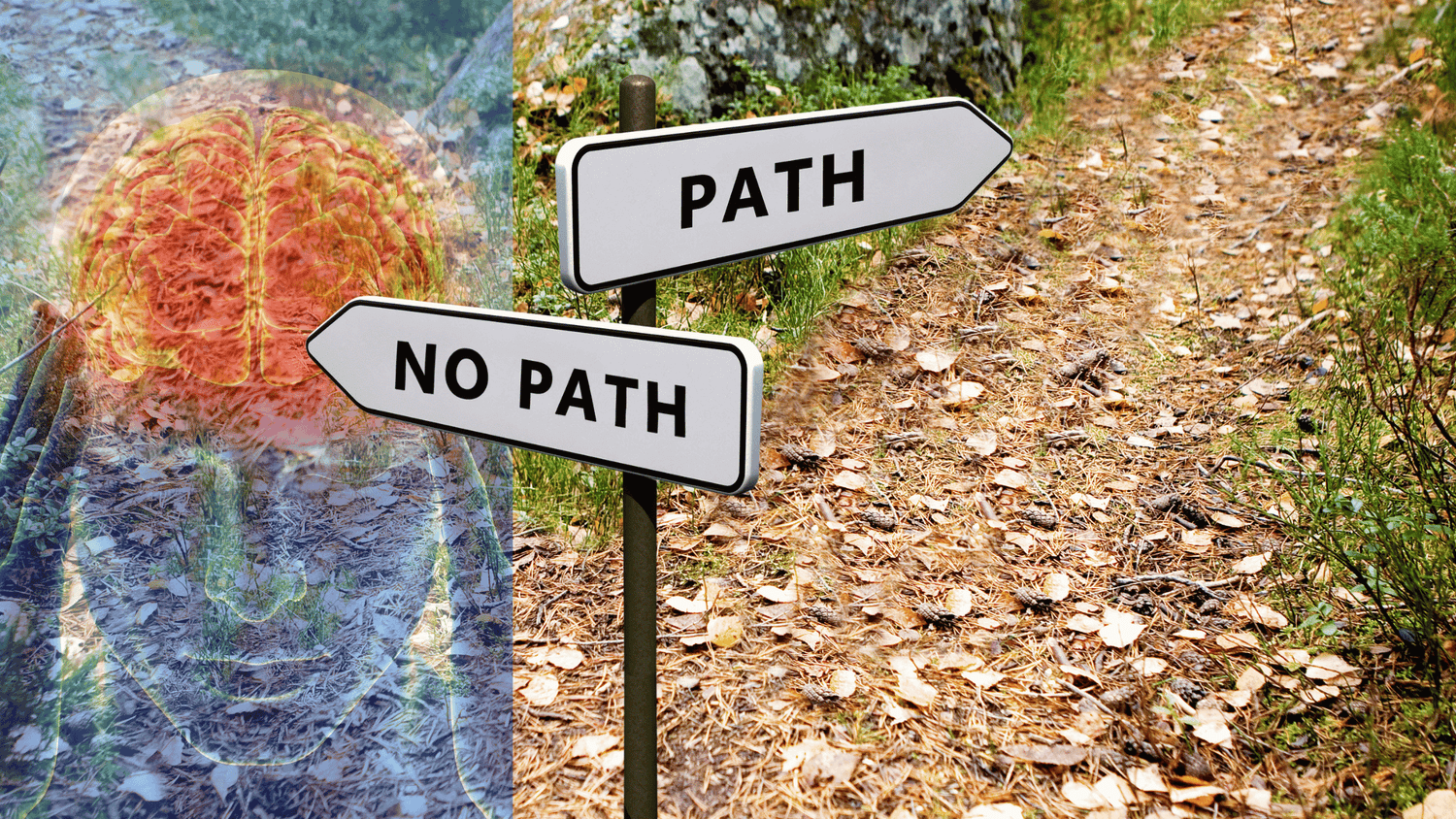
The Trail in the Woods Analogy
Imagine walking through the woods.
The trail you walk every day becomes easy to follow.
It’s familiar.
Clear.
Automatic.
But creating a new trail takes effort.
At first, you have to consciously push through branches and tall grass.
The old trail still feels easier.
But over time…
the new path becomes more natural.
And eventually, the old path becomes overgrown and harder to access.
This is very similar to how neuropathways work in the brain.
What Are Neuropathways?
Neuropathways are repeated communication patterns in the brain.
The more often we:
think something
feel something
repeat a behavior
…the stronger those pathways become.
This is why repeated stress, emotional responses, habits, and beliefs can begin to feel automatic over time.
And it’s also why change often requires:
awareness
repetition
emotional support
and consistency
At first, creating a new pattern requires effort.
But eventually…
the new pattern becomes easier to follow.
The Brain Follows What We Believe
Our brains naturally look for evidence to support what we already believe.
We’ve all seen people accomplish incredible things because they believed they could.
And we’ve also seen people remain stuck because they believed they couldn’t.
Beliefs influence:
behavior
decisions
stress responses
confidence
consistency
This is why emotional work matters.
Because when we identify beliefs that are no longer serving us…
we create space for new patterns to emerge.
Emotional Anchors and Sustainable Change
When people want to create lasting change, they often focus only on behavior.
But sustainable change usually requires something deeper:
👉 an emotional anchor.
An emotional anchor is a meaningful reason connected to:
values
identity
purpose
health
family
freedom
or the life someone truly wants to create
Then:
we identify what’s no longer serving us
clear emotional resistance and old patterns
and begin reinforcing a new pathway consistently
This is where lasting transformation begins.
Epigenetics, Epinutrition & Daily Inputs
One of the most fascinating areas of modern science is epigenetics.
Epigenetics explores how environment and lifestyle influence how genes are expressed.
Epinutrition looks specifically at how nutrition may influence those processes.
This means our daily inputs matter.
Things like:
food
stress
movement
sleep
thoughts
and environment
Healthy Habits High Returns® Insight
Healthy Habits High Returns® is built on a simple principle:
👉 What you support consistently becomes stronger.
Whether it's:
• habits
• thoughts
• stress responses
• beliefs
• or daily routines
Small daily inputs compound over time.
This is true for individuals.
And it’s true for organizations.
Because when you support the whole person…
👉 performance follows.
How Sho Richek Functional Nutrition and Lifestyle Counseling Can Help
At Sho Richek Functional Nutrition and Lifestyle Counseling, I work with individuals and organizations to improve energy, reduce burnout in the workplace, and support sustainable performance.
For organizations, this means:
building workplace wellness programs that support capacity
addressing stress, nutrition, and behavior patterns
improving employee engagement and retention
increasing employee productivity and performance
As a Functional Nutrition and Lifestyle Counselor and Advanced Belief Clearing Practitioner, I focus on identifying the patterns behind behavior—across digestion, metabolism, stress, and subconscious beliefs—so change actually lasts.
My approach is collaborative. I respect and work alongside conventional care while helping you bridge the gap between short-term results and long-term wellbeing.
Because when we support the body from the inside out…
👉 performance follows.
In Summary
Behavior change is rarely just about information.
It’s often connected to:
• emotions
• beliefs
• stress
• neuropathways
• and repeated patterns
The good news?
New patterns can be created.
And over time…
those new pathways become easier to follow.
Sometimes the smallest shifts create the biggest momentum.
🌿 When we support the body from the inside out, the results last.
What's Next?
Next, we’ll explore how stress, food, energy, emotions, beliefs, and subconscious patterns influence cravings, eating behaviors, performance, and long-term consistency.
When Shoshanna works with employees and individuals, these are often the types of conversations they have together:
Why do I keep returning to the same habits?
Why do I feel exhausted even when I’m trying?
Why do I lose consistency during stress?
Why do cravings feel so strong sometimes?
Why do I know what to do—but still struggle to follow through?
How do I create habits that actually last?
What emotional patterns may be influencing my behaviors?
How do I support my body instead of constantly fighting it?
Because sustainable change isn’t just about information.
It’s about understanding what’s driving behavior.
✨ Ready To See ROI in Your Wellness Programs
👉 Schedule a brief conversation, Click here.
Let’s explore how Healthy Habits High Returns® can support your team.
Wellness isn’t a perk—it’s a performance strategy®

Welcome!
Thank you for visiting! I'm Shoshanna Richek, a certified Functional Nutritionist, and I'd love to be your guide on the journey to food freedom.
Ready to learn about emotional eating and see how I can help you? Just click here!


Get Expert Advice on Holistic Healing
Sho Richek Functional Nutrition and Lifestyle Counselor copyright 2023-26 All Rights Reserved.