
How Functional Nutrition Supports Your Immune System
In This Blog, You'll Learn:
How Functional Nutrition Looks at Immune System Support
How Your Immune System Works
Why Gut Health Matters for Immune System Support
Foods and Supplements for Immune System Support
My Personal Protocol for Travel
How Sleep and Stress Affect Immune Health
How Movement Supports Your Immune System
When Frequent Illness Needs Medical Attention
Client Experience
Healthy Habits High Returns® Insight
How a Functional Nutritionist Can Help Support Immune Health
In Summary
Looking for More Insights?
Next Week
Helpful Tools
Your Immune-Support Check-In
How Functional Nutrition Looks at Immune System Support
You finally get over a cold, start feeling like yourself again, and then a few weeks later you're reaching for the tissues. Again?
Your first thought may be, What can I take to boost my immune system? Vitamin C? Zinc? Elderberry? Echinacea? A probiotic? Supplements can absolutely have a place, but from a functional nutrition perspective, I prefer to start with a different question: What does your immune system need in order to do its job well?
Your immune system doesn't work independently from the rest of you. Nutrition, digestion, sleep, stress, movement, medical conditions, medications, age, and exposure to infections can all influence the larger picture.
That's why supporting your immune system isn't about finding one magic food or supplement. It is about looking at the whole person and providing your body with supportive inputs consistently.
How Your Immune System Works
Your immune system isn't a single organ. It is an extensive network of cells, tissues, organs, barriers, and chemical messengers working together to recognize and respond to potential threats.
Your skin and mucous membranes help prevent unwanted organisms from entering the body. If something gets through those first defenses, your innate immune system can respond quickly. Your adaptive immune system, which includes B cells and T cells, creates more targeted responses and can develop immune memory after exposure to particular pathogens.
Bone marrow, the thymus, spleen, lymph nodes, lymphatic vessels, bloodstream, digestive tract, and other tissues all participate in immune function. This also helps explain why I prefer the phrase support your immune system rather than simply “make it stronger.”
We want our immune response to work appropriately. Too little response can leave us vulnerable to infection, but an immune system that responds inappropriately can also create problems, including allergic and autoimmune responses.
Functional nutrition isn't about pushing the immune system harder. It's about supporting the conditions that allow the body to function as well as possible.
Why Gut Health Matters for Immune System Support
This is one of the most important connections in the entire article: About 70% of the immune system is in the gut. More specifically, much of the body's immune activity is associated with the intestinal tract and its gut-associated lymphoid tissue. The intestinal lining is constantly interacting with food, microorganisms, and other substances while immune cells help distinguish between what belongs and what may represent a threat.
That makes sense when you think about what your digestive tract does every day. It is one of the largest interfaces between your internal body and the outside world. This is also why the digestive system keeps appearing as we move through our Body Systems series.
Your gut isn't simply breaking down breakfast. The intestinal barrier, gut microbiome, immune cells, digestive processes, and the foods you eat are interacting continually. That's why gut health and immunity deserve to be discussed together.
It doesn't mean every immune problem originates in the gut, nor does it mean taking a probiotic will automatically fix an immune problem. It means that supporting digestive health can be an important part of supporting overall immune health.
Foods and Supplements for Immune System Support
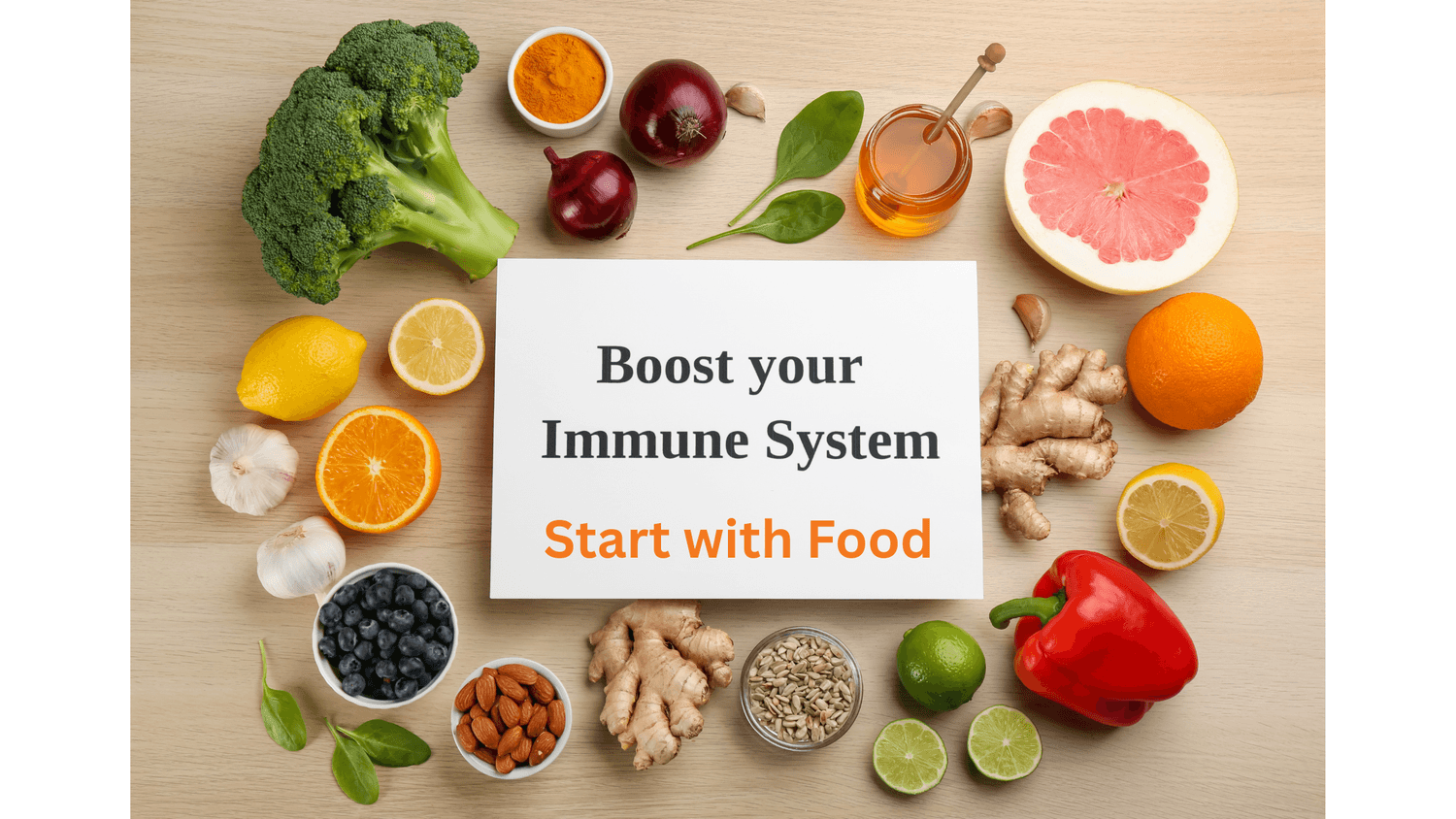
So, what can you do beginning today? Start with food. You can take supplements, but your immune system still needs a nutritional foundation.
Protein is especially important because the body needs amino acids to build and maintain tissues and create many of the proteins involved in immune responses. Vitamins and minerals including vitamins A, B6, B12, C, D and E, folate, iron, selenium, zinc, copper, and magnesium also participate in normal immune function.
Your nutritional foundation can come from meals containing quality protein, plenty of colorful plant foods, fiber-rich carbohydrates, and healthy fats. Think about salmon with sweet potato and broccoli. Eggs with vegetables, berries, and avocado. Lentils with greens, colorful vegetables, seeds, and olive oil.
And because gut health and immune health are so closely connected, pay particular attention to fiber-rich plant foods. Vegetables, berries, beans, lentils, nuts, seeds, oats, and other plant foods provide different types of fiber that help nourish the microorganisms living in the digestive tract.
If you tolerate them, fermented foods with live cultures can also be part of the picture. Plain yogurt, kefir, sauerkraut, kimchi, and other fermented foods may help introduce beneficial microorganisms into the diet. You don't have to eat all of them.
Eat foods you enjoy. Variety matters more than finding one perfect gut-health food. Then we can talk about supplements. Vitamin C is essential to normal immune function. Zinc is important too. Probiotics may be helpful in certain circumstances, but the effect varies greatly depending on the strain, product, and person. This is why I don't automatically ask, “Which supplement should everyone take?” As a functional nutritionist, I am much more interested in asking, “What does this person need?”
My Personal Protocol for Travel
All that said, I do believe in giving my immune system some additional support before travel. My personal protocol is to use a product called Activate before, during, and after I travel. At the same time, I'm especially mindful of my food, sleep, hydration, and movement because traveling can disrupt all of them. My meals may be different, my sleep schedule may change, and I'm around many more people than I would be during a normal day at home.
I don't view Activate, or any supplement, as a guarantee that I won't get sick. It is simply another layer of support that I personally choose to use. Supplements can also interact with medications or may not be appropriate for certain health conditions, so what works for me won't necessarily be right for everyone. You can take supplements, but start with food.
How Sleep and Stress Affect Immune Health
Food isn't the only input your immune system receives. Sleep and immune function communicate with one another. Immune activity can affect sleep when we're sick, and adequate sleep supports important aspects of immune function. This gives us another reason to look beyond supplements when we are thinking about immune health. How have you been sleeping?
And then there is stress. Stress isn't simply an emotion occurring somewhere in your head. Your body responds physiologically to what is happening around you. Stress can also influence our behavior. When we're overwhelmed, we may sleep less, eat differently, move less, drink more alcohol, or simply have less capacity to take care of ourselves.
That is why one of my wellness principles is capacity before motivation. Sometimes people know exactly what they “should” be doing. They simply don't have the capacity to do it right now. Helping someone restore some of that capacity can be far more useful than handing them another list of healthy behaviors.
How Movement Supports Your Immune System
Movement is another behavior that supports much more than weight management. In our lymphatic-system article, we talked about how muscular movement helps lymph travel through lymphatic vessels. The lymphatic system and immune system are closely connected because lymphatic tissues help transport, filter, and organize immune activity.
Movement also supports cardiovascular, metabolic, musculoskeletal, and mental health.
You don't have to turn that into another demanding exercise program. Walk after lunch. Garden. Stretch between meetings. Ride your bike. Dance while you're making dinner.
Sometimes the most sustainable healthy behaviors are simply the ones we enjoy enough to keep doing.
When Frequent Illness Needs Medical Attention
Everyone gets sick occasionally. Being exposed to a virus doesn't mean you've done something wrong or that your immune system has failed. But patterns matter.
If infections seem unusually frequent, severe, difficult to clear, or significantly different from what is normal for you, that is worth discussing with your healthcare provider. The same is true if you are experiencing persistent fever, significant unexplained weight changes, prolonged or unexplained swollen lymph nodes, unusual fatigue, or other new or concerning symptoms. At that point, the answer isn't to keep buying supplements until something works. It's to get more information.
This is one of the reasons I see Healthcare Advocate as part of the work I do. Sometimes the most useful next step is helping someone recognize that a concern belongs in a conversation with their doctor and helping them organize the questions and information they want to bring with them.
What Clients Say
Angela described our work together this way:
“Shoshanna is very thorough and personalized, and guided me through deep diving into specific topics I wanted to focus on. I have tried a variety of programs in the past prior to working with her with little to no success. After working with her for 8 weeks, I saw noticeable improvements in my nutrition, physical health, and relationship with food.”
I'm not sharing Angela's experience to suggest that I treated an immune condition.
What stands out to me is “thorough and personalized.”
Her health wasn't reduced to one food, one symptom, or one supplement. We looked more deeply at what was happening and what was getting in the way.
That is how I think about functional nutrition in general.
Instead of immediately asking, “What can I take?”, we can begin with a better question:
“What does my body need support with?”
Healthy Habits High Returns® Insight
Think about this same issue in the workplace. People don't stop being human when they arrive at work. Poor sleep, stress, nutrition, illness, digestive concerns, family responsibilities, medications, and medical appointments all come with them.
When employees aren't feeling well, it can affect their energy, concentration, attendance, and ability to perform at their best.
Organizations aren't responsible for diagnosing someone's immune health. They can, however, make practical health education and existing medical, EAP, wellness, and benefit resources easier for employees to understand and use. They can also create an environment where taking care of yourself isn't viewed as interfering with productivity.
Healthy Habits High Returns® helps organizations improve employee wellbeing outcomes through behavior-based wellness counseling, practical nutrition guidance, and sustainable lifestyle strategies while strengthening their wellness program ROI.
Wellness Isn’t a Perk, It’s a Performance Strategy®.
How Sho Richek Functional Nutrition and Lifestyle Counseling Can Help
My role is helping clients get to root causes, understand what's getting in the way and supporting them in changing it.
As a Functional Nutrition and Lifestyle Counselor, I look at the connections among nutrition, digestion, sleep, stress, movement, medications, supplements, symptoms, and medical history rather than assuming one concern has one simple cause.
For someone searching for a functional nutritionist, Nutritionist Charleston SC, or nutrition Charleston, that whole-person approach can be especially valuable when several pieces of the health picture seem connected.
We may look at meal patterns, protein and fiber intake, digestive health, food tolerance, sleep, movement, stress, existing laboratory information, medications and supplements, and symptoms worth tracking. Then I organize that information into a personalized, one-page Functional Nutrition Blueprint.
We don't try to change everything at once. We decide where to begin.
As a Healthcare Advocate, I can also help you organize what you've noticed and prepare questions for your physician or other healthcare professionals. When conventional medical evaluation belongs in the picture, I want it there. Functional nutrition works alongside medical care, not in place of it.
In Summary
Your immune system doesn't depend on one vitamin, one supplement, or one superfood. It is a complex network, and a large part of that immune system is connected to your gut. That's why digestion and nutrition deserve such an important place in the immune-health conversation.
If you want to begin supporting your immune system today, start with the basics. Eat enough protein. Include a variety of colorful plant foods. Feed your gut with fiber-rich foods. Include fermented foods if they work well for you. Sleep. Move. Pay attention to stress.
Supplements can have a place too. My personal protocol includes additional supplementation around travel, but I don't want supplements to distract us from the foundation. You can take supplements, but start with food.
And if you're getting sick unusually often or something simply doesn't feel right, become curious about the pattern and involve your medical provider when appropriate.
When we support the body from the inside out, the results last.
What's Next?
Your Heart Needs More Than Exercise: Everyday Support for Cardiovascular Health.
Next week we'll look at how functional nutrition can support cardiovascular health through nutrition, movement, blood pressure, cholesterol, blood sugar, stress, sleep, and other daily habits.
Ready to Take the Next Step?
If this resonates with you, I’d love to support you.
👉 Schedule a complimentary consultation here.
Let’s explore what sustainable support could look like for you.
Ready to explore how Healthy Habits High Returns® can support your team? Schedule an exploratory call.
Wellness isn’t a perk—it’s a performance strategy®
Twice a Month Newsletter
Would you like to stay in touch and receive supportive information as well as a new recipe?
Visit my website and sign up in the middle of the page. You'll also receive an audio of my 3-Minute Trigger Tamer.
Looking for More Insights?

Welcome!
Thank you for visiting! I'm Shoshanna Richek, a certified Functional Nutritionist, and I'd love to be your guide on the journey to food freedom.
Ready to learn about emotional eating and see how I can help you? Just click here!


Get Expert Advice on Holistic Healing
Sho Richek Functional Nutrition and Lifestyle Counselor copyright 2023-26 All Rights Reserved.