
How Functional Nutrition Supports Heart Health
In This Blog, You'll Learn:
How Functional Nutrition Looks at Heart Health
Know Your Numbers: Blood Pressure, Cholesterol and Blood Sugar
How Functional Nutrition Supports Healthy Cholesterol
Heart-Healthy Fats: What to Add, Not Just What to Avoid
Why Fiber Is One of the Simplest Heart-Healthy Tools
Your Heart Needs Movement, Sleep and Stress Support Too
When Heart Symptoms Need Medical Attention
Client Experience
Healthy Habits High Returns® Insight
How a Functional Nutritionist Can Support Heart Health
In Summary
Looking for More Insights?
Next Week
Helpful Tools: Your Heart-Health Check-In
How Functional Nutrition Looks at Heart Health
When people think about taking care of their heart, exercise is usually one of the first things that comes to mind. We hear that we should walk more, get our heart rate up and do some cardio. Movement absolutely matters, but your heart needs more than exercise.
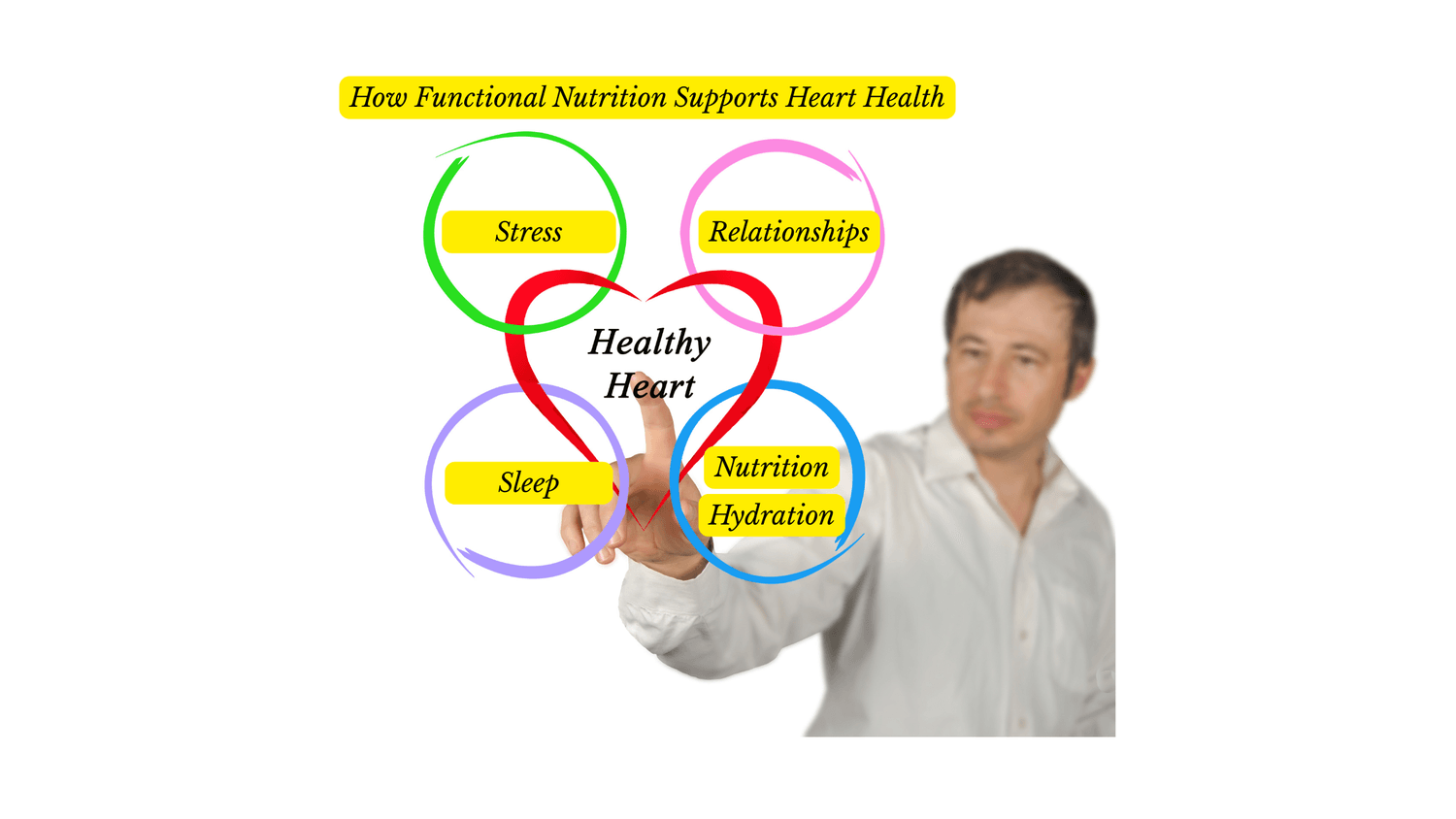
Heart health is connected to nutrition, blood pressure, cholesterol, blood sugar, sleep, movement, tobacco exposure, stress, medications, family history, age and other health conditions. In fact, the American Heart Association's Life's Essential 8 looks at several of these areas together, including eating patterns, physical activity, tobacco exposure, sleep, cholesterol, blood sugar and blood pressure.
This is one reason functional nutrition fits so naturally into the heart-health conversation. Rather than looking at one food, one number or one habit in isolation, we look at the larger picture and how the pieces may be influencing one another.
Maybe your cholesterol has changed. Perhaps your blood pressure is beginning to creep upward, or blood sugar has become something your doctor wants you to watch. You may also have perfectly good numbers and simply want to be proactive about keeping your heart healthy. In each situation, the information matters, but the next question is equally important: What can you do with that information in everyday life?
Know Your Numbers: Blood Pressure, Cholesterol and Blood Sugar
One of the simplest things you can do for your cardiovascular health is know what is happening inside your body. High blood pressure or elevated cholesterol may be present without obvious symptoms, which is why routine care, appropriate screenings and conversations with your healthcare provider matter. The CDC identifies high blood pressure and high cholesterol among the major risk factors for heart disease, along with smoking and several other health and lifestyle factors.
Blood pressure, cholesterol, triglycerides and blood sugar can all provide useful information about your cardiovascular and metabolic health. I don't see those numbers as grades. I see them as information that can help you and your healthcare team determine what may deserve more attention.
Cholesterol is a good example. We often hear HDL called "good cholesterol" and LDL called "bad cholesterol," but cholesterol itself is transported through the bloodstream by lipoproteins. Elevated LDL cholesterol is important because it can contribute to plaque buildup and cardiovascular risk.
Once you have that information, I don't want to stop at the number. I also want to understand what you're eating, how you're sleeping, how much you're moving, what stress looks like, whether blood sugar is part of the picture, what medications you're taking, your family history and what your healthcare team is already monitoring. The number matters, but understanding the pattern around it can help identify practical places to begin.
How Functional Nutrition Supports Healthy Cholesterol
The cholesterol conversation can become confusing quickly. Over the years people have been told to avoid fat, avoid eggs, eat very low-fat diets, eat more fat, eliminate carbohydrates or focus almost entirely on one particular food or nutrient.
With functional nutrition, I would rather look at your overall eating pattern than make one food the villain. What kinds of carbohydrates are you eating most often? Are beans, lentils, vegetables, fruit and other fiber-rich foods regularly on your plate, or are highly processed foods providing much of your carbohydrate intake? What types of fats are you eating? Are fish, nuts, seeds and plant oils part of your normal routine? How frequently are vegetables and other whole plant foods showing up?
Crowding out less supportive foods with ones that are more supportive is a great way to think about long term changes.
Saturated fat also deserves attention. The American Heart Association notes that too much saturated fat can raise LDL cholesterol and recommends replacing some foods higher in saturated fat with sources of unsaturated fat. The goal is not to divide everything you eat into "good" and "bad." It is to become more aware of your usual pattern and decide where a supportive change could realistically fit.
Heart-Healthy Fats: What to Add, Not Just What to Avoid
I don't want people to walk away from a heart-health conversation afraid of fat. Our bodies need dietary fat, including essential fatty acids that we cannot make ourselves. What matters is the type of fat, the amount, the overall eating pattern and what one food may be replacing.
Foods such as extra-virgin olive oil, avocado, walnuts, almonds, chia, flax and fatty fish provide primarily unsaturated fats. The American Heart Association recommends choosing foods containing monounsaturated and polyunsaturated fats in place of foods higher in saturated and trans fats.
In real life, that might mean cooking with olive oil more often instead of butter, adding walnuts or ground flax to oatmeal, putting avocado on a salad or bowl, or choosing salmon or trout at some meals. Those aren't dramatic changes, and they don't require you to follow a rigid diet.
That's an important part of the way I approach nutrition. Instead of thinking only about what needs to disappear from your plate, we can also look at what supportive foods can be added or substituted in ways you actually enjoy.
Why Fiber Is One of the Simplest Heart-Healthy Tools
Fiber is one nutritional tool that deserves plenty of attention in the cholesterol conversation, particularly soluble fiber. The National Heart, Lung, and Blood Institute recommends increasing soluble fiber from foods such as fruit, beans and oats as part of its dietary approach to lowering LDL cholesterol. Soluble fiber can help reduce the absorption of cholesterol and fats through the intestinal wall.
This creates plenty of practical possibilities without requiring an entirely new diet. You might have oatmeal with berries and ground flax for breakfast, add lentils to soup, put black beans or chickpeas into a salad, or have an apple or pear with a handful of nuts.
I especially like the question, "What can I add?" Sometimes adding a supportive food feels much more manageable than spending the entire day concentrating on everything you believe you should stop eating. One addition can also become a habit, and then you can build from there.
Your Heart Needs Movement, Sleep and Stress Support Too
Nutrition is important, but cardiovascular health isn't created entirely in the kitchen. Regular movement supports cardiovascular fitness and also connects with blood pressure, blood sugar and overall metabolic health. For some people that may include structured exercise, while for others a sustainable starting point may simply be walking more often, gardening, riding a bicycle or getting up from a desk regularly throughout the day.
The same principle applies to sleep. The American Heart Association includes sleep as one of its eight essential areas for cardiovascular health and recommends that most adults aim for an average of seven to nine hours. Poor sleep is associated with greater risk of high blood pressure, elevated blood sugar and cholesterol, obesity and heart disease.
Stress belongs in this conversation too, but telling someone to "stop stressing" isn't particularly helpful. A more useful question is: What helps your body come down from stress? It might be walking, music, gardening, meditation, drumming, deep breathing, spending time with someone you enjoy or creating a better boundary around work.
None of those choices has to be perfect to matter. When nutrition, movement, sleep and stress-supportive habits begin working together, they create a much more complete picture of heart health.
When Heart Symptoms Need Medical Attention
Functional nutrition and lifestyle counseling can play an important role in preventive health, but they do not replace medical care. If you have diagnosed high blood pressure, elevated cholesterol, diabetes or another cardiovascular condition, your physician or healthcare team should remain an important part of the plan. Some people will need medication or other medical treatment in addition to changes in nutrition and lifestyle.
There are also times when the right next step is emergency care, not a nutrition strategy. Heart attack warning signs can include chest pressure, squeezing, fullness or pain; discomfort in one or both arms, the back, neck, jaw or stomach; shortness of breath; nausea; lightheadedness; cold sweating; or unusual fatigue. The American Heart Association advises calling 911 if heart-attack symptoms are present.
I don't see lifestyle support and conventional medicine as competing approaches. Sometimes the healthiest plan includes both, with each member of the healthcare team contributing something different.
What Clients Say
Jon described something about our work together that captures an important part of sustainable health change:
“Sho digs deeper than goals. She helps you discover WHY you desire to be healthier. She got real with me and created an ‘aha’ moment that changed how I looked at my health journey.”
I think that belongs in a conversation about heart health because most of us already know some of the basics. We know we should eat well, move our bodies, sleep and manage stress. Knowing what to do isn't always what gets in the way.
Sometimes we need to understand why taking care of ourselves matters enough to keep choosing it. Maybe you want to travel, hike, garden, play with your grandchildren or simply maintain the ability to do the things you enjoy as you get older. Perhaps heart disease runs in your family and being proactive feels particularly important.
Your reason doesn't need to sound impressive. It simply needs to matter to you, because that personal connection can make everyday choices feel less like another health assignment and more like something you're choosing for the life you want.
Healthy Habits High Returns® Insight
This same issue becomes especially interesting in the workplace. Many organizations already provide biometric screenings, health assessments, insurance benefits, EAPs, wellness programs, disease-management resources or fitness benefits. Those resources can provide employees with valuable information.
A biometric screening, for example, may alert someone that their blood pressure, cholesterol or blood sugar deserves attention. Then that employee returns to work and continues living with deadlines, meetings, family responsibilities, food choices, stress, disrupted sleep, medical appointments and the same habits that existed before the screening.
That's why I think of a screening as a snapshot. It can identify something worth paying attention to, but the employee may still need help understanding how health information connects with everyday behavior.
This is where Healthy Habits High Returns® can add another layer. Functional nutrition and lifestyle counseling can help employees connect health information with nutrition, movement, sleep, stress and existing medical recommendations. It can also help someone determine which benefits or healthcare resources already available to them may be useful.
The screening provides information. Ongoing support can help an employee figure out what to do with that information in real life.
Healthy Habits High Returns® helps organizations improve employee wellbeing outcomes through behavior-based wellness counseling, practical nutrition guidance, and sustainable lifestyle strategies while strengthening wellness program ROI.
Wellness Isn’t a Perk, It’s a Performance Strategy®.
How Sho Richek Functional Nutrition and Lifestyle Counseling Can Help
My role is helping clients get to root causes, understand what's getting in the way and supporting them in changing it.
As a Functional Nutrition and Lifestyle Counselor, I look at how different pieces of someone's health may connect rather than assuming one concern has one simple explanation. With cardiovascular health, that may include nutrition and meal patterns, fiber intake, types of dietary fat, digestion, movement, sleep, stress, blood-sugar patterns, medications, supplements, family history and the medical information you already have.
For someone searching for a functional nutritionist, Nutritionist Charleston SC, or nutrition Charleston, this whole-person perspective can be especially useful when several recommendations are beginning to feel disconnected or overwhelming.
After reviewing the information, I organize the most important patterns and priorities into a personalized, one-page Functional Nutrition Blueprint. It may include nutrition and meal-pattern observations, lifestyle considerations, supportive habits, questions for your medical providers, areas to track and a few initial steps. Instead of trying to change everything at once, we agree on where to begin and build from there.
As a Healthcare Advocate, I can also help you organize what you've learned, recognize patterns and prepare questions for your physician or other healthcare professionals. If you're already working with a cardiologist, primary-care physician, registered dietitian or another specialist, my work is designed to support and complement that care rather than replace it.
Heart health is exactly the kind of area where collaboration matters.
In Summary
Your heart needs more than exercise. It benefits from nourishing food, supportive fats, enough fiber, regular movement, restful sleep, attention to stress, appropriate monitoring of blood pressure, cholesterol and blood sugar, and conventional medical care when needed.
You don't have to completely overhaul your life this week. You might begin by adding oatmeal or beans for more soluble fiber, using olive oil more often, including fish in your meals, taking a walk after dinner, or getting to bed a little earlier. You may simply need to check your blood pressure or schedule the medical appointment you've been postponing.
Choose the next step that makes sense for your health and your life. Heart health isn't built in one dramatic decision. It is supported by choices that gradually become part of your everyday rhythm.
Sometimes the smallest shifts create the biggest momentum.
What's Next?
Confused About Fat? How Functional Nutrition Looks at Healthy Fats and Cholesterol
Next week we'll take a closer look at dietary fat, including saturated and unsaturated fats, omega-3s and cholesterol, and why supporting your health doesn't mean being afraid of fat.
Ready to Take the Next Step?
If this resonates with you, I’d love to support you.
👉 Schedule a complimentary consultation here.
Let’s explore what sustainable support could look like for you.
Ready to explore how Healthy Habits High Returns® can support your team? Schedule an exploratory call.
Wellness isn’t a perk—it’s a performance strategy®
Twice a Month Newsletter
Would you like to stay in touch and receive supportive information as well as a new recipe?
Visit my website and sign up in the middle of the page. You'll also receive an audio of my 3-Minute Trigger Tamer.
Looking for More Insights?
You may also enjoy:

Welcome!
Thank you for visiting! I'm Shoshanna Richek, a certified Functional Nutritionist, and I'd love to be your guide on the journey to food freedom.
Ready to learn about emotional eating and see how I can help you? Just click here!


Get Expert Advice on Holistic Healing
Sho Richek Functional Nutrition and Lifestyle Counselor copyright 2023-26 All Rights Reserved.